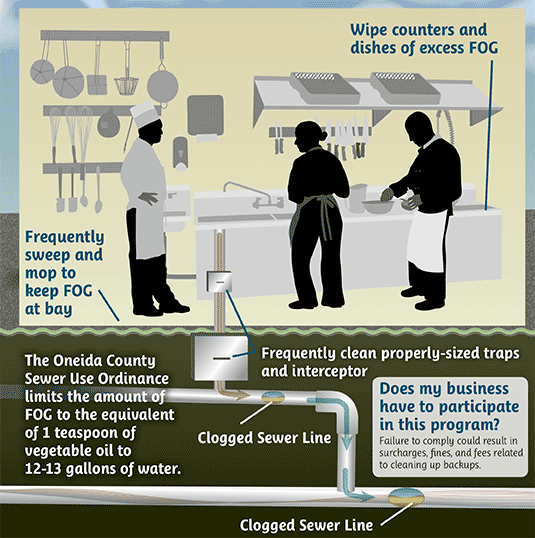
Sanitary Sewers: Sanitary sewers carry wastewater from homes and businesses to wastewater treatment plants. They consist of pipes or “laterals” that are attached to homes, businesses and other buildings, main sewer lines that transport wastewater from the laterals to wastewater treatment plants (sometimes called water reclamation facilities), pump stations that help move the sewage through the pipes where gravity doesn’t do the trick, manholes that provide access to the pipes, and finally, the wastewater treatment facilities themselves, where wastewater is cleaned before it is released it back into the environment.
The role of sanitary sewer systems is to get that wastewater to treatment plants without any of it leaking from the pipes or overflowing from manholes (what is called a Sanitary Sewer Overflow or SSO). Leaks and SSOs can both contaminate groundwater and nearby water sources. Sanitary sewer systems also must be maintained in order to prevent Inflow and Infiltration (I&I), which occurs when stormwater enters the system through cracks in pipes, illegally attached drainage systems, or leaks in manhole covers. The extra stormwater that enters the system through I&I winds up in the wastewater treatment facility, putting extra (and costly) pressure on the treatment process.